
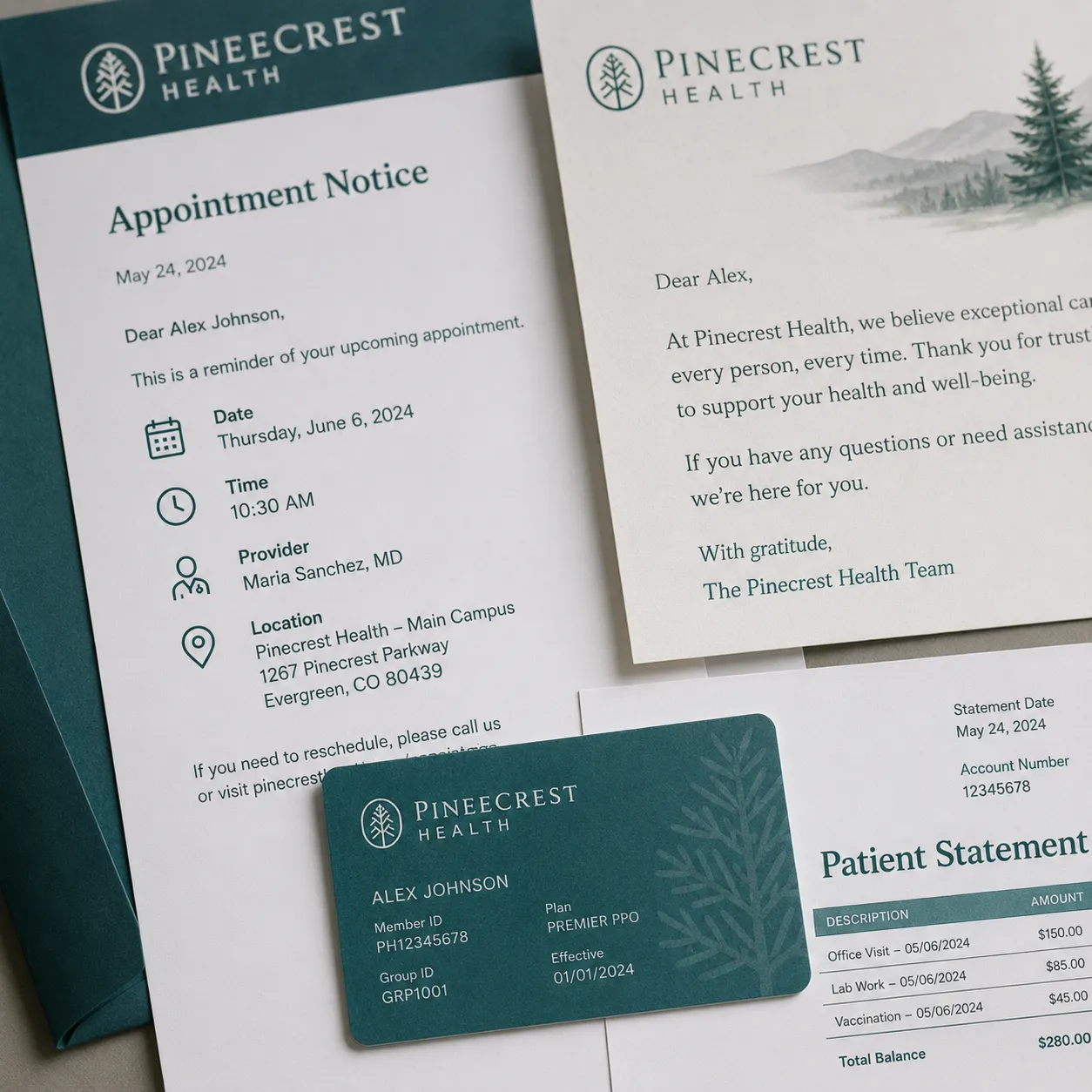
Modernizing Critical Communications Without Breaking Trust
Critical communications have a tough job.
They need to be accurate, secure, timely, easy to understand, and delivered through the right channel. They often include billing statements, notices, member communications, policy updates, account information, healthcare communications, financial documents, municipal notices, and other high-stakes messages.
These are not “nice to have” communications. They are the pieces people depend on.
That is why modernizing them can feel risky. Everyone wants a better process, cleaner design, digital access, faster approvals, and stronger reporting. But nobody wants disruption, compliance issues, missed mailings, confused customers, or a flood of support calls.
The good news: modernization does not have to mean ripping everything apart. It can happen in smart, controlled steps.
"Critical communications are not just messages. They are trust delivered on a deadline."
Why Critical Communications Are So Hard to Change
Most organizations know when their communication process needs work. The signs are usually clear:
- Too many manual steps
- Too many disconnected vendors
- Slow approvals
- Outdated templates
- Inconsistent branding
- Limited visibility into production
- Hard-to-track mailings
- Data issues
- Digital and print channels that do not match
- Customer service teams fielding avoidable questions
The challenge is that these communications are often tied to compliance, customer trust, and daily operations. A billing notice or healthcare member communication cannot simply be paused while the team figures out a new workflow.
That is why modernization has to be practical. The goal is not “new for the sake of new.” The goal is safer, clearer, more reliable communication.
Start With the Risk Points
Before changing templates, platforms, workflows, or vendors, start by identifying where the most risk lives. Look at:
- Data intake
- File transfer
- Template setup
- Variable fields
- Suppression rules
- Proofing
- Approvals
- Print production
- Mail preparation
- Digital delivery
- Archiving
- Reporting
- Customer service handoffs
This helps the team understand what needs to be protected before anything gets improved.
For example, a billing communication may need a clearer layout, but the bigger issue might be data accuracy. A healthcare notice may need digital access, but the biggest risk might be proofing variable content. A municipal mailing may need faster production, but the problem may start with approval delays.
Keep the Customer Experience Simple
The best critical communications are easy to understand. Over time, required language, legal notes, billing details, benefit information, payment instructions, and account data can pile up until the communication becomes difficult to scan.
Modernization is a chance to make the message clearer. Ask:
- What does the recipient need to know first?
- What action do they need to take?
- Where do they go for help?
- What information can be grouped or simplified?
- What content is required?
- What content is creating confusion?
- Does the print version match the digital version?
- Is the call to action easy to find?
Good design matters here, but clarity matters more. A better layout can reduce confusion, support response, and make customer service easier.
Connect Print and Digital Carefully
Many organizations want to move critical communications into more digital-friendly systems. Digital access can improve convenience, speed, and reporting. But print still matters. Some recipients prefer paper. Some require paper. Some communications need a physical record.
A smart modernization plan does not force print and digital to compete. It makes them work together. That might include:
- Printed statements with QR codes
- Notices that connect to secure portals
- Digital approval workflows
- Online payment paths
- Email or text reminders
- Print-ready and digital-ready templates
- Matched messaging across channels
- Delivery reporting
- Archived versions for customer service teams
The experience should feel connected, not patched together.
Strengthen Data and Suppression Rules
Critical communications depend on clean data. If the data is wrong, the communication is wrong.
That is why modernization should include a close look at data hygiene, address quality, file structure, suppression rules, personalization logic, and quality control steps. A beautiful template cannot overcome bad data. A good process helps catch problems before they become expensive or risky.
Build a Better Approval Process
Approvals are often where critical communications slow down. Legal, compliance, marketing, operations, finance, IT, customer service, and leadership may all need to review different parts of the communication.
A stronger approval workflow should define who reviews what, when each review happens, which version is final, what changes require re-approval, how proofs are shared, how comments are tracked, how approvals are documented, and who releases the job to production.
"Modernization does not remove the need for review. It makes review easier to control."
Make Reporting Part of the Plan
Critical communications should not disappear into a black hole after they are approved. Teams need visibility into when files were received, when proofs were approved, when the job entered production, when pieces mailed, what was suppressed, what was returned, and what happened next.
A Modernization Roadmap
A safe modernization plan can happen in phases.
Phase 1: Map the current process
Document files, templates, approvals, vendors, timelines, channels, and pain points.
Phase 2: Identify risk
Look for data issues, compliance concerns, version control problems, manual steps, and reporting gaps.
Phase 3: Improve the template
Make the communication clearer, easier to scan, and better aligned with brand standards.
Phase 4: Strengthen data and QA
Review fields, suppressions, proofing steps, address quality, and quality control.
Phase 5: Connect digital tools
Add portals, QR codes, payment paths, digital approvals, or reporting where they make sense.
Phase 6: Measure and improve
Track delivery, response, customer service feedback, returned mail, and internal efficiency.
Final Takeaway
Modernizing critical communications is not about chasing the newest tool. It is about protecting trust while improving the process.
Start with risk. Clean up the workflow. Make the message clearer. Connect print and digital carefully. Strengthen data. Improve approvals. Add reporting. That is how organizations modernize without disruption.