
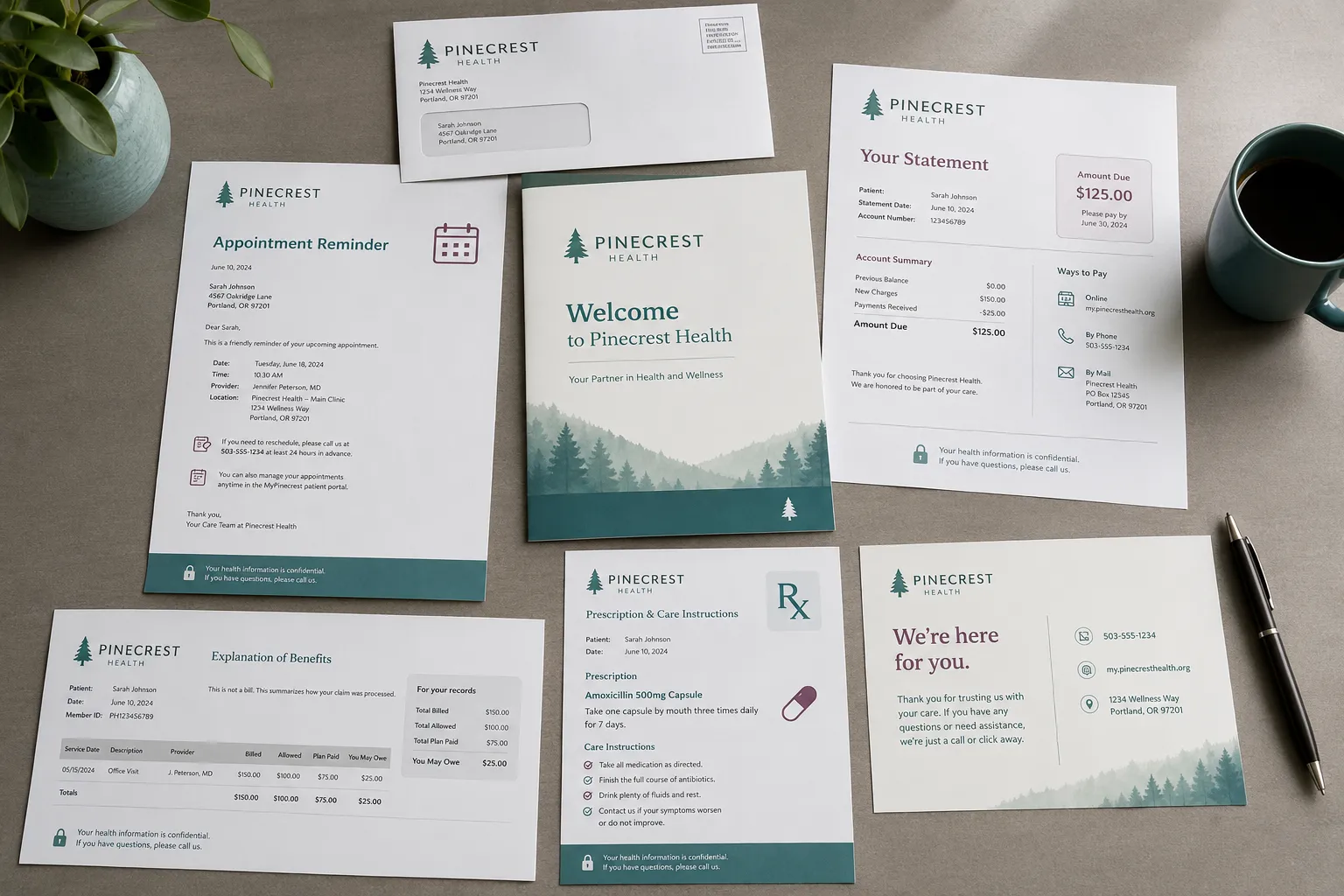
A Healthcare Member Communications Program in Action
Healthcare member communications are not simple.
A health plan may need to send thousands, or even millions, of member communications each year. These can include notices, benefit updates, enrollment materials, ID-related communications, billing information, reminders, letters, forms, packets, and other important documents.
Each piece needs to be accurate. Each version needs to go to the right person. Each mailing needs to meet the deadline. Each process needs to protect sensitive information. Each communication needs to be clear enough for members to understand.
This use case shows how a healthcare member communications program can work when print, mail, data, variable content, digital connections, and accountability are handled through one coordinated process.
The Challenge
A healthcare organization needs to communicate with members across multiple programs, locations, plans, and communication types. The team is managing:
- Member notices
- Benefit updates
- Enrollment packets
- Billing-related communications
- Reminder letters
- Regulatory communications
- Variable data fields
- Multiple versions
- Print and mail deadlines
- Digital access points
- Compliance reviews
- Internal approvals
The risk is not just that the process is busy. The risk is that the wrong information could reach the wrong person, a deadline could be missed, or members could receive unclear instructions. In healthcare, communication mistakes can quickly become trust problems.
The Solution
The organization needs one accountable partner to manage the moving parts. That partner needs to understand data, print, mail, variable content, security, quality control, and reporting. Just as important, the process needs to be repeatable.
A coordinated program can include:
- Secure file transfer
- Data intake and review
- Address hygiene
- Suppression logic
- Template setup
- Variable data printing
- Version control
- Proofing and approvals
- Print production
- Mail preparation
- USPS coordination
- Digital links or QR codes
- Reporting and tracking
- Reorder or recurring communication support
Step 1: Organize the Data
The program starts with data. Before anything is printed or mailed, the file needs to be reviewed for structure, required fields, version logic, suppressions, and address quality.
Depending on the communication, the data may determine member name, address, plan type, language preference, region, provider information, member ID, benefit details, required inserts, communication version, QR code or personalized link, mailing segment, and suppression status. This is where accuracy begins.
Step 2: Build the Templates
Healthcare member communications often need to balance clarity, compliance, and personalization. The template should make it easy for members to understand what the communication is about, why they are receiving it, what action they need to take, where to get more information, what deadline matters, and how to contact support.
At the same time, the template needs to support variable data, required language, multiple versions, and approval requirements. A strong template system helps the organization move faster without recreating every communication from scratch.
Step 3: Manage Proofing and Approvals
Proofing is a critical step. For healthcare member communications, teams may need to review static content, variable fields, legal language, plan details, design, accessibility, and mailing setup.
A strong proofing process should make it clear which version is being reviewed, which fields are variable, which sample records are being checked, who needs to approve, what changes were made, and when the file is ready for production.
Step 4: Print, Mail, and Track
Once approved, the communication moves into production. This may include printing, inserting, sorting, mailing, and tracking. USPS tools such as Intelligent Mail barcode can support mail visibility and tracking, which helps teams understand movement through the mail stream.
Step 5: Connect to Digital When It Helps
Some healthcare communications benefit from a digital connection. That might include a QR code to a secure portal, a link to more information, a payment page, an appointment scheduler, a form, or a digital resource.
The key is to make the digital path helpful and secure. Print should make the message clear. Digital should make the next step easier.
What Makes the Program Work
A healthcare member communications program works best when the process is controlled from start to finish. That means:
- Clean data
- Clear templates
- Secure workflows
- Strong QA
- Version control
- Documented approvals
- Reliable print and mail production
- Delivery visibility
- Digital connections when appropriate
- One accountable team managing the details
"Scale is only helpful when the process stays accurate."
Final Takeaway
Healthcare member communications require more than print and mail. They require accuracy, security, clarity, timing, and trust.
When data, templates, approvals, production, mailing, and reporting work together, the whole program becomes more manageable. Members get clearer communications. Internal teams get better visibility. The organization gets one accountable process instead of scattered handoffs.