
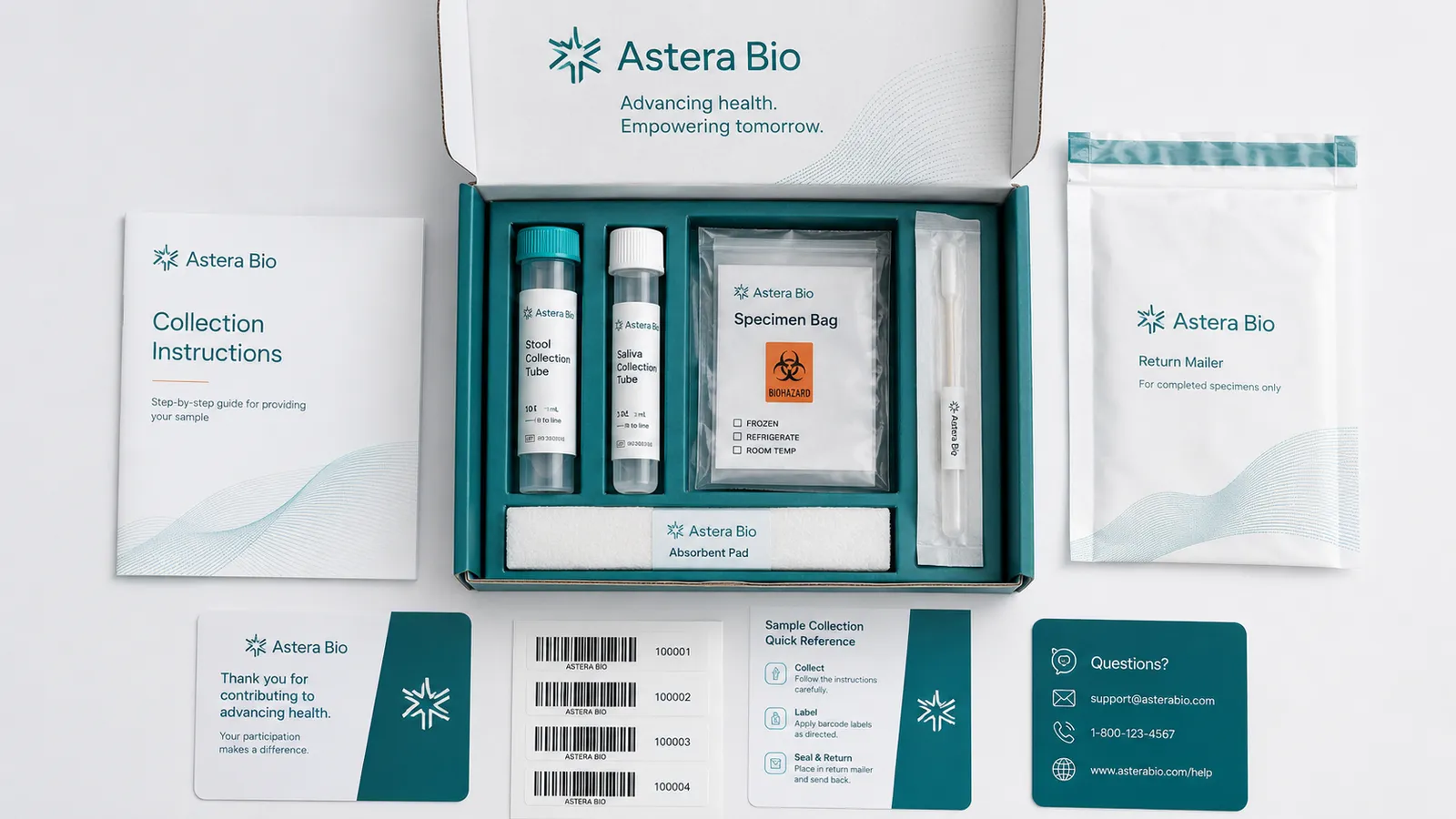
Anatomy of a Specialty Kit
A specialty kit is more than the sum of its parts. Especially in clinical or laboratory environments, a kit is a tool that must be reliable, compliant, and easy for the recipient to use. When designing a kitting program, understanding the anatomy of a production-ready kit helps ensure nothing is missed at the assembly table or in the hands of the user.
1. Collection & Transport Materials
The core of many specialty kits involves components for sample collection—swabs, vials, lancets, or collection cups. These materials often come with specific storage requirements and strict lot/expiry control. A production-ready kit ensures these are staged correctly and protected within the packaging to prevent damage.
2. Instructions for Use (IFU)
The IFU is arguably the most important printed piece. It must be legible, physically easy to find within the box, and written in plain language. In specialty kitting, the IFU is often placed at the very top of the kit so it is the first thing the recipient sees upon opening.
3. Personalization & Data Components
Many kits require a personalized element—a requisition form, a welcome letter, or a label with a specific patient or member ID. This requires a kitting partner capable of managing variable data printing and ensuring the right data piece ends up in the right box.
4. Compliance Labeling
Specialty kits often carry regulatory requirements for labeling. This can include biohazard markings for return logistics, UDI (Unique Device Identification) symbols, or specific lot and expiry stickers. These labels must be durable and correctly placed according to the program’s quality standards.
5. Return Logistics Materials
If the kit is designed for return (like a specimen collection kit), it must include everything needed for that return trip: a biohazard bag, absorbent material, and a pre-paid return shipping label. The goal is to make the return process as frictionless as possible for the user.
6. Protective Outer Packaging
The box itself serves as both a brand touchpoint and a protective shell. It needs to be sized correctly for the components (to minimize shipping costs and waste) while being sturdy enough to survive the fulfillment process without crushing clinical vials or lancets.
"A great kit is invisible to the user. They open it, they use it, they return it, and the process feels effortless. That simplicity is the result of careful anatomy design."
Summary of a Production-Ready Program
Building a successful specialty kitting program requires a partner who understands these components and can manage the inventory, printing, and assembly under one roof. When the anatomy of the kit is locked, the production can scale with confidence.
- Lot-controlled clinical supplies
- Variable data personalized inserts
- Compliant labeling and IFUs
- Engineered protective packaging
- Integrated return logistics